
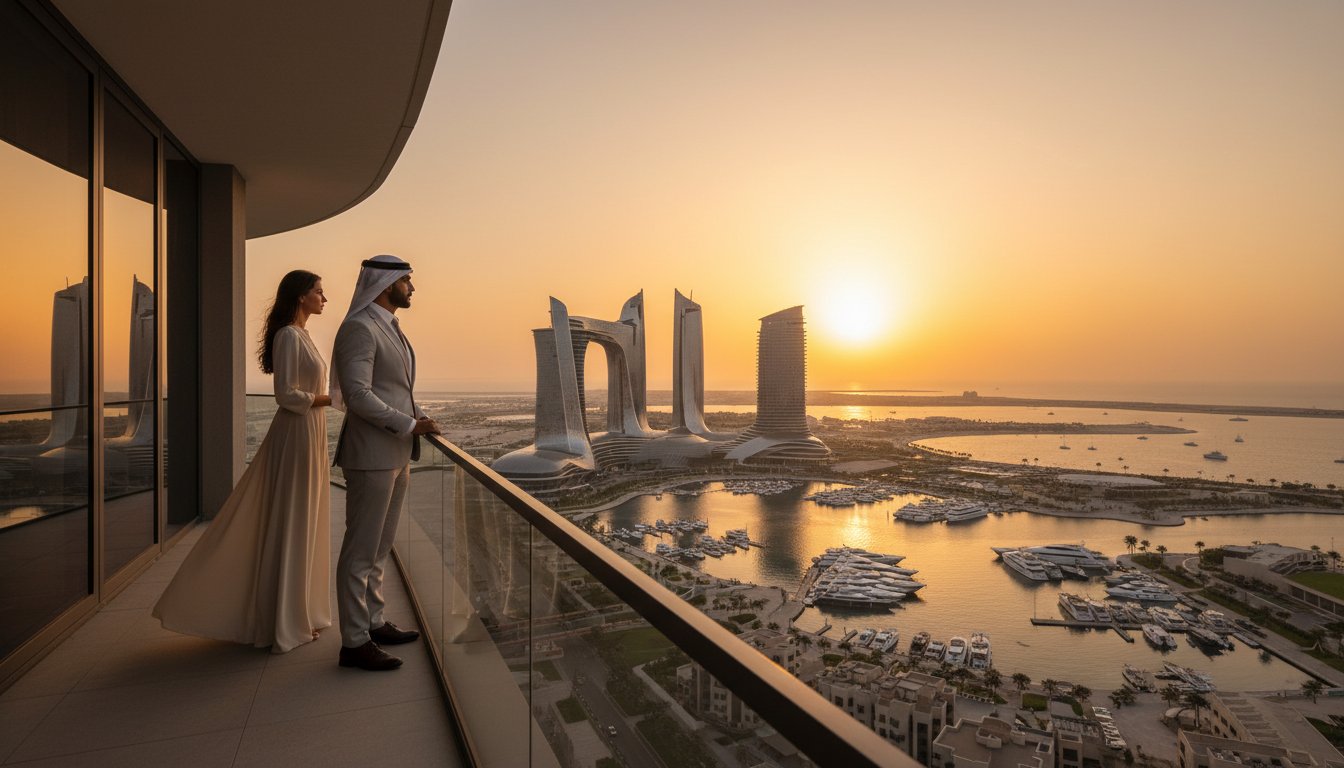
Did you know that Qatar’s real estate market commanded a staggering QAR 26.02 billion in sales value throughout 2025? This 45% increase confirms what elite investors already suspect: the nation has matured into a sophisticated residency and yield anchor for global portfolios. You likely recognize that the post-World Cup era hasn’t signaled a slowdown, but rather a transition toward a stable, high-value growth phase. For those exploring Qatar real estate investment for foreigners, the landscape is no longer about speculative gambles. It’s about securing a legacy within a visionary economy that balances tradition with unparalleled modern luxury.
We understand that opaque legal requirements and the distinction between freehold and leasehold zones can often feel like a barrier to entry. This guide simplifies your path to ownership, detailing how a strategic QAR 730,000 investment secures your family’s future through sponsor-free residency. You’ll discover the nuances of the 2026 market, from the digital efficiency of the SAK portal to the high-yield potential of AI-driven assets in Lusail. We’ll examine the strategic advantages of the new Preliminary Real Estate Registry and identify the specific waterfront districts where capital appreciation meets a curated lifestyle. It’s time to transform Qatar’s National Vision 2030 into your personal investment success.
Key Takeaways
- Understand how Qatar has transitioned from tournament-driven speculation to a mature growth phase anchored by the long-term objectives of National Vision 2030.
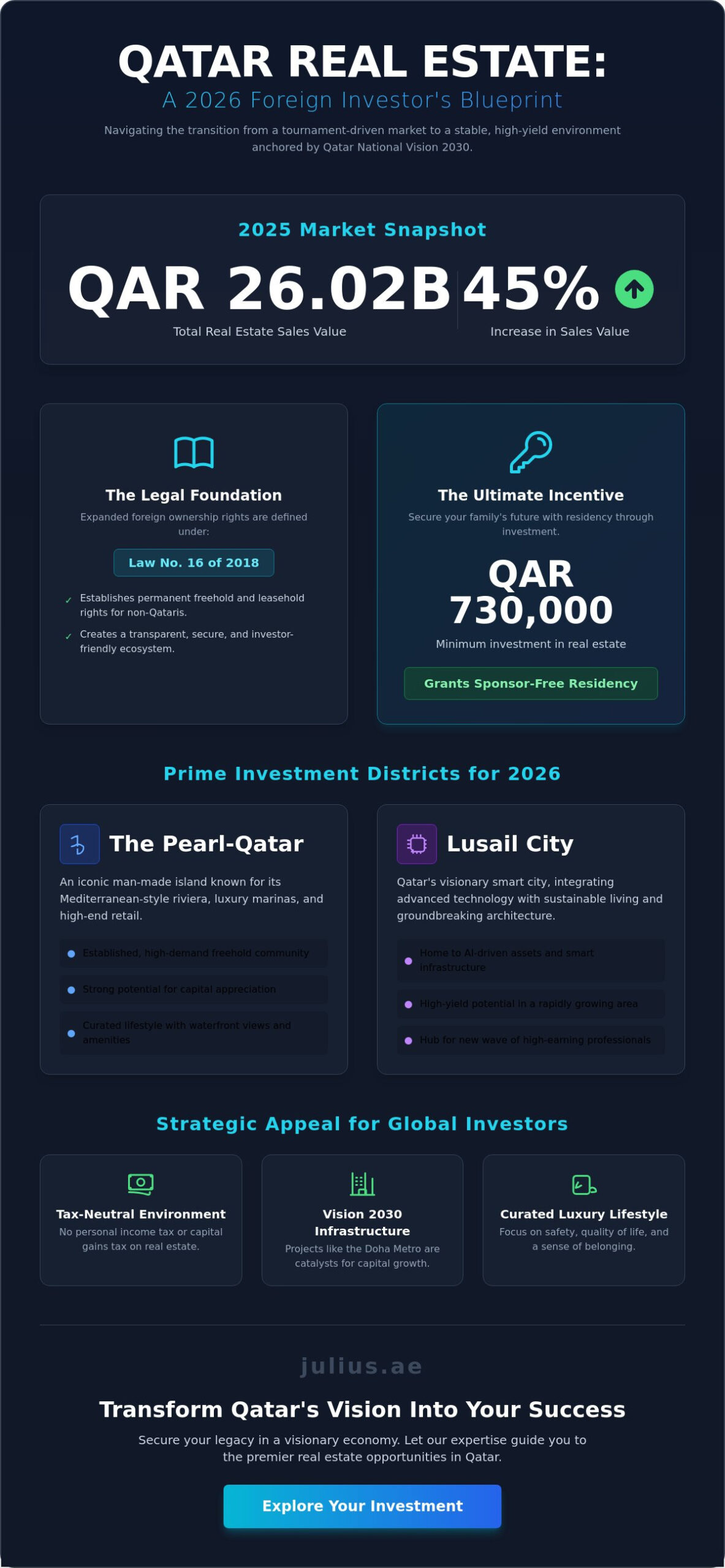
- Explore the expanded legal framework under Law No. 16 of 2018 that has redefined Qatar real estate investment for foreigners through permanent freehold and leasehold rights.
- Identify high-yield opportunities within elite districts like The Pearl-Qatar’s Mediterranean-style riviera and Lusail’s visionary smart infrastructure.
- Discover the strategic pathway to sponsor-free residency by meeting specific investment thresholds that grant long-term security for you and your family.
- Learn how a curated approach to property selection ensures your Middle Eastern portfolio reflects both financial intelligence and the art of luxury living.
The Evolution of Qatar’s Real Estate Market: Beyond the World Cup
Qatar’s skyline isn’t just a temporary backdrop for global events; it’s a testament to a deliberate economic metamorphosis. While the 2022 World Cup provided the initial velocity, current market dynamics are dictated by the long-term objectives of the Qatar National Vision 2030. This shift marks the transition from a tournament-driven economy to a diversified powerhouse focused on professional services, technology, and elite tourism. For those considering Qatar real estate investment for foreigners, this evolution offers a rare window into a market that prioritizes stability over speculation. The nation has successfully moved away from hydrocarbon dependency, creating a resilient environment where property assets are backed by a robust, multi-sector economy.
The establishment of the Real Estate Regulatory Authority (Aqarat) has been a pivotal development for 2026. It has introduced a level of transparency and institutional oversight that mirrors international standards, effectively positioning Qatar as a “safe haven” within the GCC. While other regional markets offer high-energy volatility, Doha provides a more measured and predictable pace of appreciation. Understanding the history of foreign real estate ownership helps investors see how the foundations laid in 2004 have matured into a sophisticated, investor-friendly ecosystem that protects global capital.
To visualize how these market shifts translate into personal residency benefits and lifestyle opportunities, watch this brief overview:
The Strategic Appeal for Global High-Net-Worth Individuals
Qatar’s tax-neutral environment remains a primary magnet for global capital. There’s no personal income tax and no capital gains tax on real estate for individuals, creating a pure environment for wealth preservation and growth. Beyond the balance sheet, Doha offers a “quiet luxury” that contrasts sharply with the frantic pace of neighboring cities. It’s a curated lifestyle destination where families find safety and long-term investors find a sense of belonging. The focus here is on quality of life and the art of living, making it an ideal anchor for a prestigious international portfolio.
Vision 2030: The Roadmap for Property Value Appreciation
Realized property value in 2026 is inextricably linked to massive infrastructure achievements. Projects like the Doha Metro and smart city initiatives in Lusail aren’t just conveniences; they’re catalysts for localized capital growth. The massive North Field LNG expansion is also funneling a new wave of high-earning professionals into the country, creating a sustained demand for premium residential units that outstrips supply in prime districts. For a broader regional perspective, you can compare these dynamics to our Luxury Property Dubai guide, which illustrates how Qatar real estate investment for foreigners serves as a sophisticated, lower-volatility alternative in the Middle Eastern landscape.
Understanding the Legal Framework for Foreign Ownership in Qatar
The legal architecture of Qatar’s property market underwent a visionary transformation with the implementation of Law No. 16 of 2018. This legislation wasn’t merely a minor update; it was a sophisticated expansion of rights that signaled Qatar’s readiness for global capital. While we provide these market insights to help you understand the landscape, please remember that this doesn’t constitute formal legal or financial advice. The Law 16/2018 on Non-Qatari Ownership serves as the primary bedrock for current policy, establishing clear boundaries and protections for international buyers. It’s a framework designed to ensure transparency, overseen by the Ministry of Justice and the Ministry of Municipality to protect every transaction.
Freehold vs. Leasehold: Making a Strategic Choice
Freehold ownership provides the absolute right to the property and the land it occupies in perpetuity. For anyone exploring Qatar real estate investment for foreigners, this is the gold standard, as it offers the most direct pathway to permanent residency and long-term wealth preservation. Currently, there are 10 designated freehold zones, including iconic locations like The Pearl-Qatar and Lusail City. In contrast, the 16 leasehold areas offer ownership rights for a renewable term of 99 years. These leasehold options often appeal to commercial entities or short-term institutional investors who prioritize strategic positioning in traditional business hubs over permanent land rights. For the private investor, freehold remains the most prestigious vehicle for a curated portfolio.
The Transaction Process: A Seamless Journey to Ownership
Acquiring a luxury asset in Doha is a structured, rhythmic process that reflects the nation’s commitment to digital efficiency. Working with a master curator like Julius Property ensures that your journey begins with meticulous due diligence and market intelligence. Once you’ve identified a property that aligns with your lifestyle aspirations, the path to ownership follows three clear stages:
- Selection and Reservation: After verifying the property’s status, you’ll sign the Sale and Purchase Agreement (SPA) and pay a reservation fee to secure the asset.
- Contractual Execution: Both parties finalize the terms of the sale, often utilizing the Ministry of Justice’s Preliminary Real Estate Registry to protect off-plan interests.
- Official Registration: The final transfer occurs at the Ministry of Justice Real Estate Registration Department. Under Ministerial Decision No. 5 of 2026, transaction fees for transferring possession have been reduced to a highly competitive 0.25% of the assessed value.
This streamlined approach, often facilitated by the SAK digital portal, ensures that title deed registration can be completed in under 48 hours for verified assets. If you’re also considering a regional diversification, you might find our insights on bespoke opportunities in the UAE useful for balancing your Middle Eastern holdings.
Curating the Portfolio: Prime Investment Districts in 2026
Selecting the right location in Doha isn’t merely about geography; it’s an exercise in curation. For those pursuing Qatar real estate investment for foreigners, the choice of district defines the character of the asset and its long-term yield profile. The market has moved beyond broad development into a phase of specialized neighborhoods, each catering to a distinct investor persona. Whether you seek the rhythmic pulse of a financial hub or the serene exclusivity of a private island, Qatar’s 2026 landscape offers a sophisticated variety of entry points.
The Pearl-Qatar: The Art of Island Living
The Pearl-Qatar remains the crown jewel of the nation’s freehold inventory. It’s a Mediterranean-inspired riviera where the “art of living” is woven into the very architecture. Porto Arabia serves the cosmopolitan investor with its vibrant boardwalk and high-end retail, while Viva Bahriya offers a more secluded, beachfront lifestyle. These precincts are particularly attractive for their rental stability, with apartments in premium waterfront areas currently commanding yields between 6% and 8%. Investors here aren’t just buying square footage; they’re acquiring a bespoke lifestyle experience that continues to attract the region’s most discerning tenants.
Lusail City: Visionary Urban Planning
If The Pearl is about established prestige, Lusail City is about the future. As the primary focus of Vision 2030, Lusail represents the pinnacle of smart infrastructure. We’re seeing a significant “flight to quality” here, with investors gravitating toward “Smart Assets” that feature AI-driven climate control and automated facility management. The Qetaifan Islands have emerged as the district’s most exclusive residential hub, offering unparalleled privacy and leisure facilities. For forward-thinking individuals, Lusail’s off-plan opportunities provide a strategic pathway to capital appreciation as the city matures into its role as a global business and tourism center.
Strategic Anchors: West Bay and Msheireb
West Bay continues to serve as the financial heart of Doha. It’s a district characterized by soaring glass towers and a professional tenant base that keeps prime office and residential occupancy stable at around 80%. This area is ideal for those focused on corporate leasing and long-term institutional stability. Conversely, Msheireb Downtown Doha offers a completely different narrative. As the world’s first sustainable downtown regeneration project, it provides a boutique luxury experience. It blends traditional Qatari aesthetics with cutting-edge green technology, appealing to a niche demographic of high-net-worth individuals who value heritage and environmental consciousness in equal measure. This diversity ensures that Qatar real estate investment for foreigners remains a multifaceted strategy, capable of anchoring any sophisticated global portfolio.
Residency Through Investment: The Ultimate Incentive
Qatar’s residency-by-investment program isn’t just a policy; it’s a strategic invitation. For those exploring Qatar real estate investment for foreigners, the benefits extend far beyond the physical deed. The government has streamlined the process through a “Single Window” system at the Ministry of Interior, ensuring that your transition from investor to resident is as seamless as the architecture of the properties themselves. This integration between the Ministry of Justice and Ministry of Interior means that registering a property through the SAK app now automatically triggers the residency application process, removing the administrative friction often found in other global markets.
The program operates on a clear, tiered structure designed to reward long-term commitment. A minimum investment of QAR 730,000 (approximately $200,000) grants you a renewable temporary residency permit for yourself and your family. This residency is sponsor-free and remains valid as long as you maintain ownership. For the elite investor, a commitment of at least QAR 3,650,000 (approximately $1,000,000) unlocks the door to permanent residency. This tier is a rare privilege in the GCC, offering a level of permanence and institutional belonging that few other markets can match.
Permanent Residency Benefits for Families
Permanent residency is a legacy-building tool. It provides high-net-worth families with access to government-funded healthcare and world-class education at government institutions. Doha’s landscape is dotted with prestigious international schools and medical facilities that rival any global capital. Because the residency is tied directly to the property, it creates a tangible anchor for long-term security. It’s a “safe haven” play that protects both your family’s future and your capital. To maintain these rights, investors simply need to be present in Qatar for at least 90 days a year, whether continuously or intermittently.
Calculating Your Real Estate Yield and ROI
Financial intelligence is at the heart of every Qatari acquisition. Gross rental yields in Doha’s prime areas currently range between 6% and 9% for villas and 5% to 8% for apartments, significantly outperforming many European hubs. The absence of personal property tax or capital gains tax for individuals ensures that your net yield remains exceptionally high. To preserve these returns, professional property management is essential. It transforms a high-value asset into a passive, curated income stream that appreciates over time.
Ready to secure your future in the Gulf? Explore our bespoke consultancy for your residency goals to find an asset that perfectly aligns with your vision.
The Julius Standard: Navigating the Qatari Market with Expertise
At Julius Property, we don’t just facilitate transactions; we curate legacies. The complexities of Qatar real estate investment for foreigners demand more than a simple listing service. It requires a partner who understands that a property is an extension of one’s lifestyle and a pillar of a financial fortress. We position ourselves as the Master Curator of your Middle Eastern portfolio, providing the transparent, expert guidance necessary in a market that rewards deep local knowledge and international foresight. Our advisory team manages every detail, ensuring a seamless journey from initial inquiry to the final handover of a prestigious asset.
Our bespoke approach focuses on quality over quantity. We specialize in sourcing exclusive, off-market opportunities within Doha’s most coveted postcodes, from the high-rise elegance of West Bay to the serene privacy of the Qetaifan Islands. These are assets that rarely reach the public eye, reserved for those who value rarity and precision. By working with our international advisory team, you gain access to a level of market intelligence that transforms a standard purchase into a strategic victory.
Why a Global Perspective Matters
Julius Property leverages a sophisticated network and years of experience in leading markets like London and Dubai to identify true value in Qatar. We understand the nuances of GCC capital flow and how they influence property cycles. Our commitment to unparalleled service extends beyond property sourcing; we provide comprehensive support, including mortgage advisory and property management, to ensure your investment remains a high-performing asset. You can observe our commitment to these global standards by exploring our UAE property showcase, which reflects the same level of excellence we bring to the Qatari market.
Your Next Steps in the Qatari Luxury Market
The 2026 market offers a rare alignment of residency benefits and capital appreciation potential. We invite you to experience a private consultation where we can discuss your specific investment goals and long-term aspirations. Whether you’re seeking branded residences with world-class amenities or visionary off-plan developments in Lusail, our curated portfolio represents the absolute best the region has to offer. Don’t leave your legacy to chance. Begin your Qatari investment journey with Julius Property today and secure a position in one of the world’s most stable and aspirational economies.
Securing Your Position in Qatar’s Visionary Future
Qatar has matured into a sophisticated anchor for global wealth. The transition from the post-World Cup era to the realization of National Vision 2030 has created a market defined by stability and residency-driven growth. Whether you’re targeting the high yields of Viva Bahriya or the smart city potential of Lusail, the roadmap is clear. Qatar real estate investment for foreigners is no longer a niche curiosity; it’s a cornerstone for those who prioritize long-term security and the art of living.
Success in this landscape requires more than just capital. It demands the precision of a master curator. Julius Property offers bespoke investment consultancy with a global reach, providing exclusive access to off-market luxury developments that define the Doha skyline. Our seasoned international experts offer visionary guidance to ensure your acquisition is both a financial triumph and a lifestyle statement. Curate your international property portfolio with Julius Property and step into a future where excellence is the only standard. Your journey toward a prestigious Middle Eastern legacy begins with a single, strategic choice.
Frequently Asked Questions
Can a foreigner buy property in Qatar in 2026?
Yes, foreigners can legally purchase property in designated zones across the country. Law No. 16 of 2018 significantly expanded these rights, allowing for full freehold ownership in 10 specific areas and 99-year leasehold rights in 16 others. It’s a structured system designed to attract global capital while ensuring long-term market stability. This legal clarity makes Qatar real estate investment for foreigners a secure and attractive proposition for international portfolios.
How much do I need to invest in Qatar real estate to get residency?
The investment threshold for residency starts at QAR 730,000, which is approximately $200,000. This entry level secures a renewable, sponsor-free residency permit for the investor and their immediate family. For those seeking the elite benefits of permanent residency, including access to state healthcare and education, a minimum investment of QAR 3,650,000 is required. These tiers provide a tangible pathway to long-term security in a visionary Gulf state.
What are the best areas for freehold property investment in Doha?
The most prestigious freehold districts include The Pearl-Qatar, Lusail City, and West Bay Lagoon. The Pearl offers a Mediterranean-style riviera lifestyle with established high-end amenities and strong rental yields. Lusail City, known as the “City of the Future,” provides visionary smart infrastructure and significant capital appreciation potential. These areas are specifically curated to meet the standards of high-net-worth individuals who demand architectural excellence and premium locations.
Are there property taxes for foreign owners in Qatar?
Qatar does not impose personal property tax or capital gains tax on real estate for individual owners. This tax-neutral environment is a primary draw for global investors looking to maximize their net returns. While there are no annual taxes, you should account for a one-time transfer fee. Under recent 2026 regulations, this fee has been reduced to 0.25% of the property’s assessed value to encourage more international market participation.
Can I get a mortgage in Qatar as a non-resident foreigner?
Yes, non-resident foreigners can access mortgage facilities through several major Qatari banks. These financial institutions typically offer loan-to-value ratios of up to 70% for international buyers, though terms depend on individual credit profiles. It’s a rhythmic process that often requires proof of income and a minimum down payment. Our advisory team can help you navigate these bespoke financial products to ensure your acquisition is as seamless as possible.
What is the difference between freehold and leasehold in Qatar?
Freehold grants absolute, perpetual ownership of both the property and the land, whereas leasehold provides ownership rights for a renewable 99-year term. Freehold is the preferred choice for those pursuing permanent residency through Qatar real estate investment for foreigners. It offers the highest level of security and long-term control. Leasehold areas are often located in more traditional commercial hubs, appealing to institutional investors with shorter-term horizons.
Is Qatar real estate a good investment compared to Dubai?
Qatar offers a more measured, stable growth environment compared to the high-energy volatility of Dubai. While Dubai is known for its rapid pace and speculative opportunities, Doha provides a “quiet luxury” anchored by the long-term objectives of National Vision 2030. It’s an ideal market for those who value wealth preservation and steady appreciation over high-risk speculation. Both markets have their merits, but Qatar serves as a sophisticated, lower-volatility anchor.
What documents are required for a foreigner to buy property in Qatar?
The primary documents required include a valid passport, proof of funds, and a signed Sale and Purchase Agreement. Some transactions may also require a certificate of good conduct from your home country. The process is increasingly digital, utilizing the SAK portal to streamline registration with the Ministry of Justice. Working with a master curator like Julius Property ensures that all documentation is meticulously prepared, allowing for a seamless transition to ownership.
Leave a Reply