

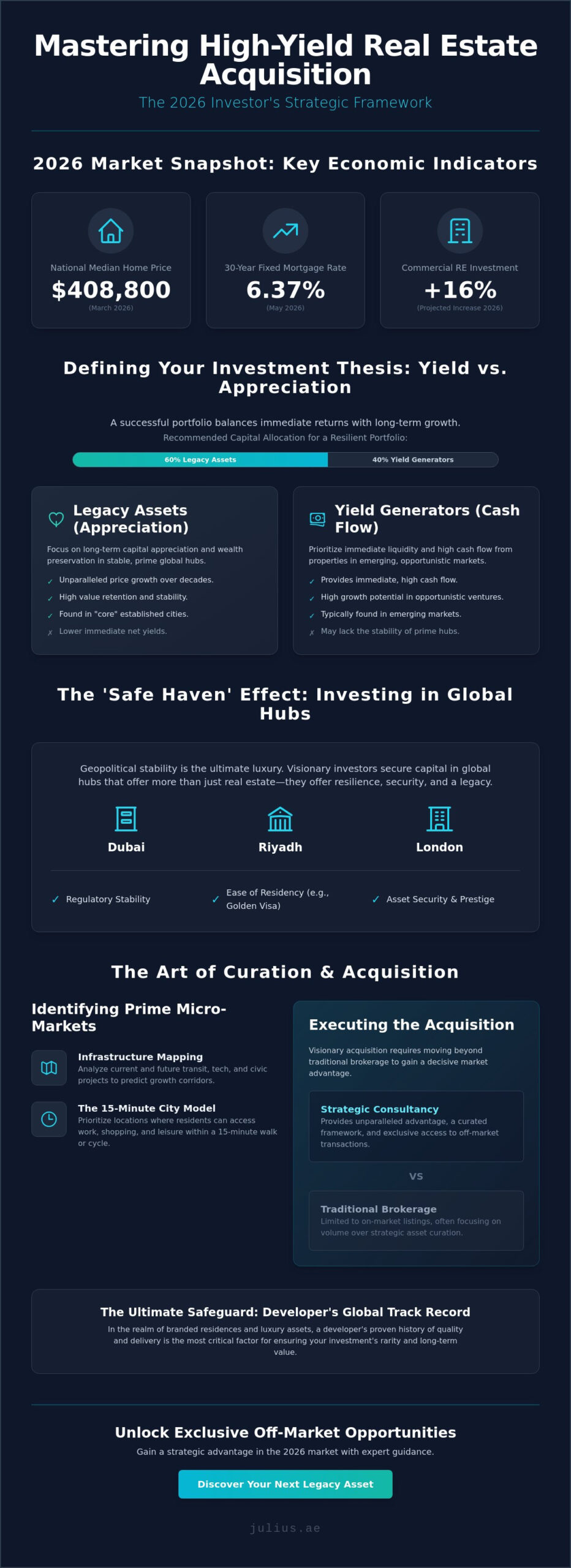
The most lucrative investments in 2026 aren’t found on public listings; they’re discovered through the mastery of identifying legacy assets that thrive regardless of economic cycles. Precision is the new currency. In an era where the national median home price reached $408,800 in March 2026, property investment is no longer about simply acquiring real estate. It’s about the strategic curation of visionary lifestyle assets that command a premium through rarity. Understanding how to choose the right property for investment requires moving beyond basic yield calculations toward a philosophy of architectural excellence and market precision.
You’ve likely noticed that traditional sectors are facing volatility, and with 30-year fixed mortgage rates sitting at 6.37% as of May 1, 2026, the margin for error has narrowed. It’s natural to feel concerned about hidden costs or the difficulty of securing exclusive, off-market opportunities. We promise to help you master the art of high-yield acquisition by providing our expert framework for identifying premium global assets. This curated guide examines the essential criteria for sustainable appreciation, including compliance with the March 1, 2026 federal reporting requirements for all-cash transactions and the impact of transit-oriented zoning shifts on the luxury market.
Key Takeaways
- Align your acquisition strategy with the 2026 market by distinguishing between immediate yield generators and legacy assets designed for long-term capital appreciation.
- Move beyond gross rental figures to master the financial anatomy of true profitability; accounting for the bespoke service charges that define high-end assets.
- Identify the next prime micro-markets by applying our visionary framework on how to choose the right property for investment; it’s a process involving infrastructure mapping and the 15-minute city model.
- Unlock the potential of branded residences and learn why a developer’s global track record is the ultimate safeguard for your investment’s quality and rarity.
- Gain entry to the world of off-market transactions by discovering how a strategic consultancy provides an unparalleled advantage over traditional real estate brokerages.
Defining Your Investment Thesis: The 2026 Real Estate Landscape
Real estate in 2026 is no longer a monolith of simple brick and mortar. It’s a sophisticated vehicle for wealth preservation that requires a visionary’s eye for rarity and a scientist’s precision for data. With the national median home price reaching $408,800 in March 2026, the question of how to choose the right property for investment has transitioned from a search for “real estate” to a strategic curation of lifestyle assets. Successful investors now prioritize properties that serve as a hedge against the 6.37% mortgage rates recorded in May 2026, focusing on intrinsic value rather than speculative bubbles.
Consulting a comprehensive guide to real estate investing provides the baseline knowledge required to navigate these complexities, but the modern elite investor must layer this with a vision for lifestyle curation. The 2026 cycle demands a nuanced approach that aligns property acquisition with broader family legacy goals, ensuring your capital remains resilient across shifting economic tides.
To gain a foundational perspective on the mechanics of acquisition in the current climate, watch this expert analysis:
Yield vs. Appreciation: Choosing Your Primary Objective
The first step in your thesis is distinguishing between pure yield plays and long-term capital appreciation assets. High-cash-flow properties in emerging markets often provide immediate liquidity, yet they may lack the stability of prime global hubs. In contrast, “core” assets in established cities offer lower immediate net yields but command unparalleled price growth over decades. Balancing a portfolio requires a mix of these elements. You might allocate 60% of your capital to stable core assets and 40% to opportunistic ventures where the potential for growth is higher. Setting realistic performance benchmarks is vital; luxury residential sectors typically prioritize value retention, while commercial real estate investment is projected to increase by 16% in 2026, signaling a return to office and retail dominance in specific micro-locations.
The ‘Safe Haven’ Effect in Global Hubs
Geopolitical stability has become the ultimate luxury. Cities like Dubai, Riyadh, and London remain resilient because they offer more than just square footage; they provide a “safe haven” for capital. In 2026, how to choose the right property for investment often comes down to the regulatory environment and the ease of residency. The UAE market, bolstered by the Dubai Golden Visa, exemplifies this trend by offering a seamless blend of residency and asset security. These markets act as a buffer against volatility in traditional sectors. When you invest in a global hub with visionary leadership, you’re not just buying a building. You’re securing a legacy asset that maintains its prestige and value regardless of regional economic shifts.
The Financial Anatomy of a High-Performance Property
Precision in financial modeling distinguishes a visionary collector from a casual buyer. While the aesthetic allure of a penthouse is undeniable, the underlying mathematics determine whether it remains a legacy asset or a liability. Mastering how to choose the right property for investment requires deconstructing the gross rental yield to reveal the actual net profit. In May 2026, with 30-year fixed mortgage rates at 6.37%, the cost of capital must be weighed against the projected net operating income (NOI). A sophisticated investor looks beyond the surface; they calculate the impact of every variable from vacancy rates to specific jurisdictional tax thresholds.
While understanding Real Estate Investment Trusts (REITs) offers a perspective on institutional real estate exposure, direct ownership of premium assets allows for bespoke leverage strategies. For instance, the 2026 capital gains tax structure, where the 20% rate applies to single filers earning over $545,500, makes tax-efficient jurisdictions like the UAE increasingly attractive. You aren’t just buying a view; you’re acquiring a fiscal structure designed for wealth preservation. To ensure your capital is positioned correctly, you might consult with an expert advisor who understands the nuances of global luxury markets.
Mastering Yield and ROI Calculations
Net Operating Income is the heartbeat of a successful acquisition. To calculate this accurately, subtract all operating expenses, including insurance, property taxes, and maintenance, from your total rental income. In the luxury sector, the “Cap Rate” serves as a vital barometer for comparing assets across different global hubs. While national median home prices saw a 1.4% increase reaching $408,800 in March 2026, prime assets often follow a different trajectory. Your ROI should account for both the immediate cash flow and the long-term appreciation potential, which in high-demand micro-markets can significantly outpace national averages.
The Hidden Costs of Luxury Ownership
High-end assets, particularly branded residences, carry unique financial obligations that must be curated carefully. Service charges in elite developments cover everything from concierge staff to the upkeep of infinity pools and private spas. Rather than viewing these as a drain, a seasoned investor treats professional property management as a strategic value-add that preserves the asset’s rarity. It’s also essential to account for sinking funds. These reserves ensure the building’s architectural integrity and technological infrastructure are maintained to a global standard, preventing sudden capital calls that could disrupt your portfolio’s liquidity.
Location Analysis: Identifying the Next Prime Micro-Market
Selecting a jurisdiction involves more than pinning a map; it requires anticipating the flow of human movement. The “15-minute city” concept has redefined property desirability by placing premium value on walkable access to work, leisure, and wellness. In 2026, how to choose the right property for investment means identifying these self-sustaining ecosystems before they reach full maturity. Established enclaves often command high entry prices, but the most visionary capital finds its home in emerging neighborhoods adjacent to these prime zones, where the “ripple effect” ensures steady appreciation. This strategy isn’t just about buying land; it’s about acquiring a stake in the future of urban living.
Success in these markets requires a rigorous approach to analyzing real estate investment deals. You must scrutinize supply-demand imbalances within exclusive enclaves, as a sudden influx of luxury inventory can dilute rarity. By looking at micro-market data, you can spot the subtle shifts that signal an area is about to transition from “up-and-coming” to “established.” Assessing the long-term viability of a neighborhood involves looking at historical price resilience during market contractions, ensuring your asset remains a safe haven for wealth.
Infrastructure and Connectivity as Value Drivers
Infrastructure is the skeletal system of real estate value. Major transit projects, such as the continued expansion of the Dubai Metro, act as catalysts for capital growth. Effective mid-2026, a California law will limit local zoning restrictions near major transit corridors, encouraging higher-density development and creating new opportunities for transit-oriented investments. These legislative shifts mirror global trends where connectivity dictates rental resilience. Proximity to business districts remains a non-negotiable for high-net-worth tenants. Investing in the UAE market near future commercial hubs often yields the highest upside, as these locations are designed to be the epicenters of 2026 economic activity. It’s vital to map these future metro lines and commercial hubs before they’re fully integrated into the public consciousness.
Micro-Market Metrics That Matter
General district averages rarely tell the full story of a luxury asset. You must examine vacancy rates in specific towers rather than broad zip codes. A high-performing asset often benefits from the “Anchor Effect,” where the presence of a five-star hotel or a flagship luxury mall boosts surrounding residential prices. This phenomenon is clearly visible when comparing Riyadh’s Vision 2030 hubs with established Dubai districts. While Riyadh offers the allure of rapid urban transformation, Dubai provides the security of a mature, globally recognized lifestyle brand. Both markets demand a bespoke analysis of micro-metrics to ensure your acquisition aligns with your long-term wealth preservation goals. For example, a tower with a 5% vacancy rate in a district averaging 12% indicates a superior level of curation and management that will protect your investment over time.
The Art of Curation: Selecting the Asset, Not Just the Building
In the upper echelons of global real estate, the structure is merely a canvas; the true value lies in the curation of the experience. Mastery of how to choose the right property for investment requires looking beyond the facade to evaluate the intangible hallmarks of rarity. In 2026, architectural significance isn’t just about aesthetics. It’s a critical driver of secondary market liquidity. A building designed by a visionary architect or affiliated with a global luxury brand maintains its allure long after the initial handover, ensuring your asset remains a coveted piece of the skyline. Precision is the new currency.
Smart building technology and ESG (Environmental, Social, and Governance) compliance have transitioned from optional luxuries to mandatory investment requirements. Institutional and private investors alike now prioritize assets with high energy efficiency and integrated digital infrastructure. These features don’t just reduce operational costs; they protect the property from future regulatory obsolescence. You aren’t just buying a residence; you’re acquiring a future-proofed technological marvel.
The Rise of Branded Residences
Branded residences have redefined the luxury landscape, with names like Four Seasons or Ritz-Carlton commanding 20% to 30% higher premiums than non-branded units in the same district. This “Branded Premium” is rooted in the promise of unparalleled service and consistent quality. Hotel-style amenities, from private chefs to 24-hour concierge services, significantly boost long-term tenant retention. When you acquire a branded asset, you’re buying into a global ecosystem of prestige. The scarcity value of iconic architectural designs further cements this value, as these limited-edition properties are often immune to the fluctuations seen in the broader market.
Due Diligence Beyond the Physical Structure
Traditional inspections often focus on red flags like structural integrity, but sophisticated investors look deeper into a developer’s financial health and past project performance. Assessing a developer’s ability to deliver on visionary promises is essential. Community management rules play a vital role in maintaining asset prestige over time. If the master plan is flawed, even the most beautiful apartment will lose value. For those exploring luxury apartments for sale in Dubai, it’s critical to scrutinize the long-term vision of the entire development. Understanding how to choose the right property for investment means vetting the stewards of your wealth as thoroughly as the property itself.
To discover a hand-selected portfolio of assets that meet these rigorous standards, view our curated collections.
Executing the Acquisition: The Role of Strategic Consultancy
The final stage in mastering how to choose the right property for investment is the execution of the acquisition itself. High-value transactions rarely mirror the simple search-and-buy nature of traditional residential sales. They require a sophisticated intermediary who understands that the most prestigious assets are often held in private portfolios, shielded from the noise of public listing platforms. While a standard transactional broker focuses on the closing of a single deal, a property investment consultant focuses on the longevity and health of your entire portfolio. This distinction is the difference between a simple purchase and a visionary wealth-building strategy.
Navigating the legal and financial paperwork for international transactions can be a formidable barrier. In 2026, new federal reporting requirements for all-cash transactions involving LLCs or trusts became effective on March 1. A strategic consultant ensures that every acquisition is seamless and compliant, allowing you to focus on the broader vision of your legacy. Portfolio management is equally vital; knowing when to hold an asset, when to exit for a premium, and when to reinvest into emerging micro-markets is what maintains value across economic cycles.
Gaining Access to Exclusive Opportunities
In competitive hubs like London and Dubai, the most lucrative assets rarely reach a public website. Top-tier consultancies secure early access to VIP off-plan launches, often months before the general public is aware of the project’s existence. This “pre-market” sourcing provides an unparalleled advantage, allowing you to select the best units in a development—those with the most desirable views or unique floor plans that drive higher secondary market liquidity. In a market where home sales are expected to increase by 14% nationwide in 2026, having a partner who can bypass the competition is essential for securing rarity and value.
The Julius Approach: Curating Your Global Portfolio
We view real estate as a bespoke service, not a commodity. Our approach begins with an unhurried consultation to understand your individual risk profile and lifestyle aspirations. We don’t just find buildings; we curate opportunities. This end-to-end service extends from mortgage advisory to leasing management, ensuring that the transition from acquisition to income generation is effortless. By positioning Julius as a trusted partner rather than a mere agent, we provide the deep local knowledge and international perspective required to navigate the complexities of the 2026 landscape. Your investment deserves a signature standard of excellence that reflects your own commitment to quality and precision.
Securing Your Legacy in the 2026 Global Market
The 2026 real estate landscape is defined by a shift toward rarity and architectural significance. We’ve examined the necessity of moving beyond gross yield to understand true net profitability, especially as mortgage rates stabilized at 6.3% in the second quarter of 2026. Mastering how to choose the right property for investment now requires a sophisticated blend of micro-market data and a deep appreciation for the “art of living” found in branded residences. It’s about selecting a visionary asset that commands a premium regardless of market fluctuations.
Julius Property serves as your elite concierge in this journey. We offer unparalleled expertise across the Dubai, London, and Riyadh markets, providing our clients with exclusive access to off-plan opportunities and high-performance assets that never reach public listings. Our bespoke portfolio management for high-net-worth individuals ensures that every acquisition aligns with your long-term wealth preservation goals and lifestyle aspirations.
Begin your curated investment journey with Julius Property.
The future of your portfolio starts with a single, strategic choice. It’s time to secure an asset that reflects your commitment to excellence and precision.
Frequently Asked Questions
What is a good ROI for an investment property in 2026?
A healthy net ROI in prime global hubs typically ranges between 5% and 8% for residential assets. In the US market, where home sales are expected to increase by 14% nationwide in 2026, investors often look for a total return that combines modest price growth of 1% to 3% with steady rental income. A successful portfolio aims for a total return that comfortably exceeds the 6.37% mortgage rates recorded on May 1, 2026.
Should I prioritize rental yield or capital appreciation?
Your choice depends on whether you require immediate liquidity or long-term wealth preservation. High-yield assets in emerging micro-markets provide monthly cash flow, while capital appreciation is the hallmark of legacy assets in established districts. Understanding how to choose the right property for investment involves balancing these goals. Many high-net-worth investors utilize a 60/40 split, favoring stable core assets for appreciation and opportunistic units for immediate yield.
How do I verify the reputation of an international property developer?
Verification requires a rigorous audit of a developer’s delivery track record and financial transparency. You should examine their history of meeting completion dates and the secondary market performance of their previous projects over the last five years. In 2026, it’s vital to prioritize developers who have successfully integrated ESG standards. Consulting a bespoke advisory firm provides access to private audits and developer health assessments that aren’t available on public listing platforms.
Is it better to invest in ready-to-move properties or off-plan developments?
Off-plan developments typically offer higher capital upside and flexible payment structures, while ready properties provide immediate rental income. In 2026, off-plan assets in visionary districts are preferred for their modern architectural standards and technological integration. Ready-to-move units act as a hedge against construction delays. Your decision should reflect whether your strategy prioritizes immediate cash flow or the 20% to 30% branded premium often found in new elite residences.
What are the benefits of buying property in a tax-free jurisdiction like Dubai?
Jurisdictions like Dubai offer significant fiscal advantages, including zero personal income tax on rental returns and no capital gains tax. This allows for higher net profitability than the US, where capital gains rates for high earners reach 20% for single filers earning over $545,500 in 2026. These tax-efficient environments, combined with residency options like the Golden Visa, make them premier safe haven markets for global capital seeking maximum retention.
What are the common red flags to watch for in luxury real estate?
Red flags include high vacancy rates in specific towers despite general district demand and a lack of a transparent sinking fund for maintenance. In 2026, you must be cautious of properties that haven’t disclosed digital alterations in listing photos, a requirement in California as of January 1, 2026. Another warning sign is a developer with a history of stalled projects. Rarity is easily compromised if the master plan allows for excessive future supply.
How much should I set aside for property management and maintenance fees?
Investors should typically allocate 10% to 15% of their gross rental income for professional management and routine maintenance. In branded residences, service charges are often higher to cover elite amenities, but these costs are generally offset by higher rental premiums. As of early 2026, detailed disclosure of transit-oriented zoning shifts makes professional oversight even more critical for protecting value. Proper budgeting ensures the asset’s prestige remains uncompromised over decades of ownership.
Can I get a mortgage as an international investor for overseas property?
Yes, many global banks offer bespoke mortgage products for international investors, though terms vary significantly by jurisdiction. As of May 1, 2026, US 30-year fixed mortgage rates sit at 6.37%, while lenders in hubs like Dubai provide competitive rates for non-residents. You’ll need to navigate specific reporting requirements, such as the federal all-cash transaction reporting for entities that went into effect on March 1, 2026. This ensures your acquisition remains compliant with international anti-money laundering regulations.
Leave a Reply