
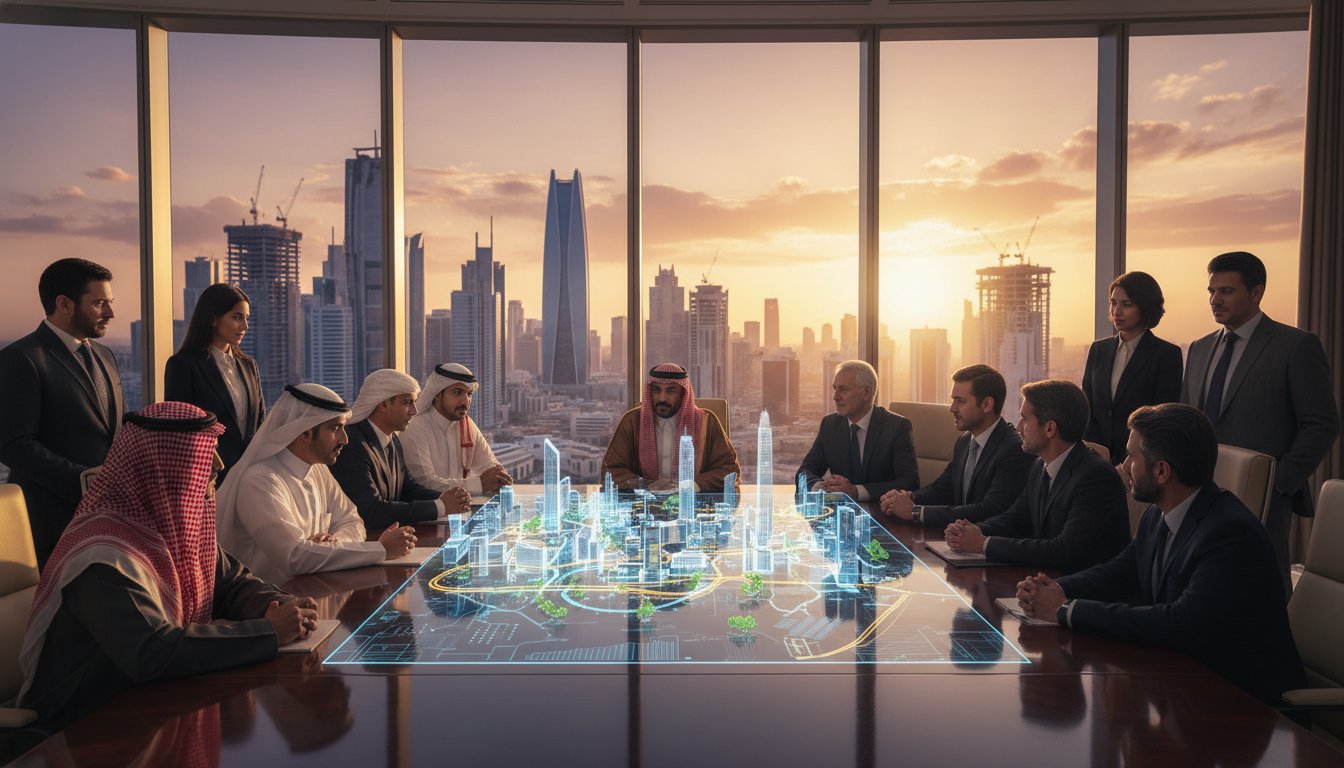
By January 2026, the Saudi capital’s landscape shifted permanently with the enactment of new foreign ownership laws, allowing international investors to secure assets in designated zones for the first time. You likely recognize that Riyadh is no longer just a regional hub; it’s a global magnet for capital. However, the sheer speed of its $800 billion transformation can feel overwhelming to even the most seasoned portfolio manager. At Julius, we understand that true luxury investment requires more than a transaction; it demands a curated perspective on where Vision 2030 infrastructure meets unparalleled capital appreciation.
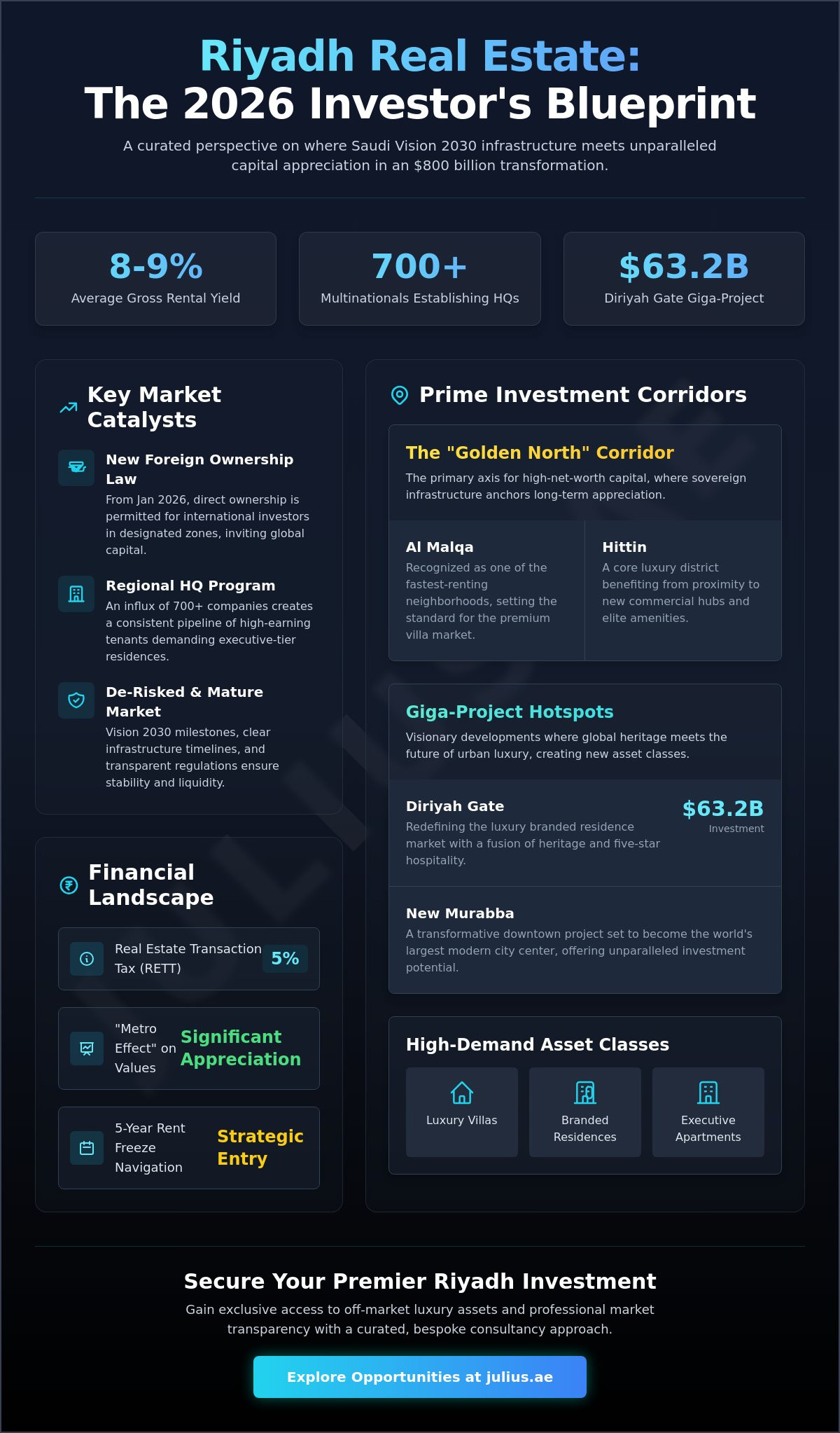
This guide provides the transparency you require, revealing the best areas for real estate investment in Riyadh where the “Metro effect” and sovereign-backed projects guarantee liquidity. We’ll explore why the “Golden North” districts like Al Malqa remain the fastest-renting neighborhoods and how the $63.2 billion Diriyah Gate development is redefining the luxury branded residence market. You’ll gain a precise understanding of the current 5% Real Estate Transaction Tax and how to navigate the five-year rent freeze to secure gross rental yields that currently average a compelling 8% to 9% citywide.
Key Takeaways
- Understand how the Regional Headquarters Program and Vision 2030 milestones are de-risking assets and driving unprecedented demand for executive-tier residences.
- Identify the best areas for real estate investment in Riyadh, with a specific focus on the high-growth corridors of the “Golden North” and the premium villa market in Al Malqa.
- Explore the investment potential of visionary giga-projects like Diriyah Gate and New Murabba, where global heritage meets the future of urban luxury.
- Gain clarity on the “Metro effect” and the shifting yield dynamics between luxury apartments and standalone villas in the 2026 market.
- Learn how a curated, bespoke consultancy approach provides international investors with exclusive access to off-market luxury assets and professional market transparency.
The Riyadh Transformation: Why 2026 is the Strategic Midpoint for Investors
The year 2026 marks a defining era for the Saudi capital, serving as the moment where the visionary blueprints of the last decade materialize into tangible, high-yield assets. Riyadh’s rapid development has evolved beyond mere construction; it’s now a sophisticated ecosystem attracting elite international capital. Investors no longer view this market through a lens of speculation. Instead, the focus has pivoted toward long-term stability and institutional-grade quality. This shift is driven by the realization of Vision 2030 milestones, which have effectively de-risked the market by establishing clear infrastructure timelines and transparent regulatory frameworks.
To better understand the scale of these developments and how they impact the market, watch this insightful overview of Saudi Arabia’s prime investment corridors:
The maturation of the Saudi real estate regulatory environment has been a catalyst for high-net-worth individuals who demand security alongside growth. With the 5% Real Estate Transaction Tax (RETT) now a standard part of the fiscal landscape, the market has shed its volatile reputation in favor of a measured, professionalized atmosphere. This environment favors those seeking the best areas for real estate investment in Riyadh, as institutional players increasingly dominate the landscape, bringing a level of liquidity and transparency that was previously elusive.
The Impact of Foreign Ownership Law Reforms
The January 2026 implementation of the new foreign ownership law represents a seismic shift for the best areas for real estate investment in Riyadh. Previously, international investors faced complex barriers to entry; today, the legal framework allows for direct ownership of premium residential assets in designated zones across the city. This reform hasn’t just opened doors; it’s fundamentally altered the market’s psychology. It invites a global standard of architectural excellence and lifestyle curation that specifically benefits the luxury villa and high-end apartment segments. As international capital enters the city, we’re seeing a flight to quality that rewards properties with unparalleled design and strategic positioning.
Riyadh as a Global Business Hub
The influx of over 700 multinational companies establishing regional headquarters in the capital has created a localized economic engine. This corporate migration ensures a consistent pipeline of high-earning tenants who prioritize proximity to work and lifestyle amenities. The “HQ Effect” refers to the accelerated appreciation of property values in districts adjacent to multinational corporate clusters, driven by the immediate housing requirements of high-earning expatriate leadership. This trend has sparked an intense demand for “Branded Residences” and serviced apartments that offer a seamless blend of five-star hospitality and private ownership, positioning Riyadh as a peer to established global hubs like Dubai or London.
The “Golden North” and Beyond: Mapping Riyadh’s High-Growth Corridors
The northward trajectory of Riyadh’s urban expansion isn’t merely a trend; it’s a calculated shift directed by the Royal Commission for Riyadh City. As the capital’s center of gravity migrates, the “Golden North” has emerged as the primary axis for high-net-worth capital. This corridor represents the best areas for real estate investment in Riyadh for those who prioritize long-term appreciation anchored by sovereign infrastructure. The investment logic here is simple: follow the path of the city’s most ambitious commercial and transit nodes.
Al Malqa and Hittin: The Luxury Standard
Al Malqa has solidified its status as the premier destination for modern luxury villas, characterized by a refined architectural aesthetic that appeals to the city’s elite. Its value proposition is anchored by its immediate proximity to the King Abdullah Financial District (KAFD). With Grade-A office occupancy reaching 98% by the end of 2025, the demand for executive housing in Al Malqa has surged, creating a robust rental environment. While prime northern districts currently offer yields around 5%, the capital appreciation potential remains the highest in the city due to land scarcity in these prestigious pockets.
Hittin complements this by offering a more lifestyle-oriented investment. It has evolved into a walkable, high-end district where luxury retail meets exclusive residential compounds. Investors here benefit from the “KAFD anchor effect,” where the concentration of multinational regional headquarters ensures a steady stream of high-earning tenants. Proximity to elite international schools further bolsters the rental market, as executive families seek seamless transitions into the Riyadh lifestyle. For those exploring similar high-end markets, our curated UAE portfolio offers a benchmark for the level of luxury now appearing in Hittin.
Al Narjis and Yasmin: The Strategic North
As the city continues its expansion, Al Narjis and Al Yasmin have become the emerging stars of the northern corridor. These districts are strategically positioned to benefit from the massive expansion of the King Salman International Airport, which is set to become one of the world’s largest aviation hubs. This proximity makes Al Narjis a focal point for off-plan apartment investments, where entry prices remain attractive relative to the projected capital gains as infrastructure matures.
The growth potential in these areas is driven by a younger demographic of Saudi professionals and expatriates who value modern, integrated communities. We’re seeing a significant shift toward boutique developments that offer amenities once reserved for gated compounds. For the savvy investor, these neighborhoods provide a gateway to the best areas for real estate investment in Riyadh, balancing the immediate stability of the established north with the exponential growth potential of the airport-adjacent corridors.
Giga-Project Hotspots: Luxury Investment in Diriyah and New Murabba
While the northern corridors offer established stability, the most profound capital appreciation is found within Riyadh’s sovereign-backed giga-projects. These developments aren’t merely neighborhoods; they’re self-sustaining ecosystems where the Saudi Public Investment Fund (PIF) is underwriting the future of global luxury. For those seeking the best areas for real estate investment in Riyadh, these zones represent a rare convergence of cultural heritage and futuristic urbanism. A recent Riyadh real estate market analysis by WSP highlights how these state-led initiatives are fundamentally shifting market dynamics, moving the city toward a more institutionalized and high-value property landscape.
The hallmark of these giga-projects is the integration of world-class hospitality brands into residential real estate. We’re seeing a surge in “Branded Residences,” where names like Four Seasons and other elite operators provide a level of service and prestige that commands a significant premium. This trend creates a scarcity value that’s difficult to replicate in standard residential districts, as the number of units within these master-planned environments is strictly controlled to maintain exclusivity.
Diriyah: Investing in Cultural Heritage
Often described as the “Beverly Hills of Riyadh,” Diriyah Gate is a $63.2 billion development that places heritage at the center of the investment narrative. The strict adherence to Najdi architectural standards isn’t just a design choice; it’s a regulatory framework that ensures long-term aesthetic integrity and property value. Living within the UNESCO World Heritage buffer zone offers a level of prestige that’s unparalleled in the region. For investors, this translates to an asset class that functions more like a rare collectible than a standard property. You can find more detail on these specific acquisition strategies in our Definitive Guide to Buying Property in Riyadh.
New Murabba: The World’s Largest Modern Downtown
New Murabba represents the futuristic counterpart to Diriyah’s heritage. As of early 2026, construction on the Mukaab, the project’s iconic centerpiece, has reached significant milestones, signaling the birth of the world’s largest modern downtown. This $50 billion+ project is built on the “15-minute city” concept, where every essential amenity is reachable within a short walk. This urban philosophy is a primary driver for future tenant demand, particularly among the high-earning professionals moving to the capital. The area’s status as a future tourism and business hub also opens lucrative opportunities for short-term rental yields, as the Mukaab becomes a global landmark attracting millions of visitors annually. It’s quickly becoming one of the best areas for real estate investment in Riyadh for those focused on the high-growth potential of the city’s new core.
Analyzing the Yield: Rental Demand and Capital Appreciation in 2026
Strategic investment in 2026 requires a nuanced understanding of the legislative ceiling and the infrastructure floor. The five-year rent freeze enacted in September 2025 has stabilized the market, shifting the focus from aggressive annual hikes to high-quality tenant retention and long-term capital gains. While the citywide average gross rental yield remains a compelling 8% to 9%, the best areas for real estate investment in Riyadh often present a choice between immediate cash flow and generational wealth preservation. Luxury apartments in central hubs currently outperform standalone villas in terms of pure yield, yet the scarcity of prime northern land ensures that villas remains the premier vehicle for capital appreciation.
The market is currently entering a phase of professionalization where institutional standards are the new benchmark. With property price growth for 2026 estimated between 4% and 7%, investors are positioning themselves for the cumulative 25% to 40% growth forecast by January 2031. This trajectory is supported by the influx of multinational professionals who prioritize quality of life and seamless connectivity over sheer square footage. To ensure your assets maintain this competitive edge, professional oversight is essential. You can explore our approach to maintaining asset value through The Essential Guide to Property Management.
The Riyadh Metro: A Value Catalyst
As the Riyadh Metro transitions from a construction milestone to an operational reality, we’re witnessing a profound shift in how expatriate executives define luxury living. Specific stations within Olaya and the King Abdullah Financial District (KAFD) have become “Transit-Oriented Development” anchors, commanding significant premiums over disconnected neighborhoods. We predict a 15% to 20% increase in capital value for premium residential properties located within 500 meters of a major Metro hub. This “Metro Effect” is particularly visible in the surging demand for luxury towers that offer direct, climate-controlled access to the city’s new arterial veins.
Short-Term vs. Long-Term Rental Strategies
The rise of Riyadh as a global tourism destination, fueled by the year-round programming of Riyadh Season, has created a lucrative niche for short-term luxury rentals. Airbnb-style assets in districts like Hittin or near the Mukaab can offer higher nightly rates, yet they require intensive management and a keen eye for interior curation. Conversely, corporate long-term leases remains the “gold standard” for stability, especially as Fortune 500 companies seek multi-year housing solutions for their leadership teams. Balancing these strategies requires a bespoke touch. If you’re ready to define your position in this market, we invite you to consult with our Riyadh investment specialists to curate a portfolio that aligns with your financial aspirations.
Navigating the Riyadh Market with Julius Property
Securing a position in the Saudi capital requires more than just capital; it demands a partner who understands the intricate tapestry of a city in the midst of a historic transformation. Julius Property serves as the Master Curator for international investors, bridging the gap between the mature excellence of the Dubai market and the explosive potential of the Saudi capital. We don’t merely facilitate transactions. We orchestrate a journey that aligns your financial intelligence with the art of living in the Middle East’s most ambitious city. Our presence in Riyadh ensures that the elite standards our clients expect in the UAE are seamlessly translated to the Kingdom’s most prestigious districts.
The acquisition of premium real estate in a rapidly evolving market can be complex. We simplify this process by providing a refined, professional distance that commands respect, acting as a trusted concierge for those who demand the absolute best. Our team possesses the deep local knowledge required to navigate the 2026 foreign ownership laws while maintaining an international perspective that prioritizes long-term asset security and lifestyle quality.
Bespoke Sourcing and Portfolio Curation
Our approach to identifying the best areas for real estate investment in Riyadh is rooted in an exclusive methodology. We specialize in sourcing off-market luxury assets that rarely reach public listings, ensuring our clients secure first-mover advantages in high-growth corridors like the Golden North and Diriyah. By identifying undervalued opportunities within these sovereign-backed zones, we help you build a portfolio that captures the maximum upside of Vision 2030 infrastructure. Many of our sophisticated clients also look for regional balance; we invite you to explore luxury apartments for sale in Dubai to understand how we apply these same curation standards to cross-border diversification.
Your Strategic Partner in Vision 2030
As your strategic partner, we navigate the nuances of the Riyadh market with a commitment to absolute transparency and elite service. We understand that for high-net-worth individuals, the value is found in the details: the architectural integrity of a Najdi villa, the proximity of a penthouse to the KAFD Metro hub, or the scarcity of a branded residence in New Murabba. Our acquisition process is unhurried and thorough, mirroring the experience of a high-end consultation where your aspirations are the sole focus. We provide the clarity you need to move with confidence in a market that is still maturing but offers unparalleled rewards for the visionary investor. Explore our exclusive Riyadh portfolio today and begin your journey toward owning a piece of the city’s future.
Securing Your Legacy in the New Riyadh
The evolution of the Saudi capital from a regional powerhouse to a global investment magnet is now undeniable. By identifying the best areas for real estate investment in Riyadh, such as the heritage-rich corridors of Diriyah or the high-growth hubs of the Golden North, you’re positioning your portfolio at the center of a $800 billion transformation. We’ve explored how the operational Riyadh Metro and the influx of multinational headquarters are driving a new standard for luxury living that rewards quality and strategic location. This is no longer a market of speculation; it’s a landscape of institutional-grade opportunity.
Julius Property offers more than just market entry. We provide exclusive access to off-market luxury assets in Diriyah and KAFD, underpinned by international standards of transparency and visionary investment consultancy. Our team delivers seamless cross-border management for those balancing Dubai and Riyadh portfolios, ensuring every acquisition meets our signature standard of excellence. Curate your Riyadh investment portfolio with Julius Property and step into a future defined by unparalleled growth and architectural rarity. The window for strategic positioning is open; let’s craft your Saudi legacy together.
Frequently Asked Questions
Can foreigners buy property in Riyadh in 2026?
Yes, as of January 2026, a new law allows foreign investors to purchase property directly in designated zones across the city. This regulatory shift simplifies the acquisition process for international high-net-worth individuals, moving away from previous complexities. It’s a strategic move to attract global capital into the Kingdom’s most prestigious residential and commercial developments.
Which area in Riyadh has the highest rental yield for luxury apartments?
The highest yields, ranging between 7% and 10%, are currently found in eastern growth corridors such as Ar Rimal, Qurtubah, and Al Munsiyah. While the citywide average sits at a compelling 8% to 9%, these emerging districts offer superior cash flow compared to the established North. However, prime northern districts remain the best areas for real estate investment in Riyadh for those prioritizing long-term capital preservation.
How does the Riyadh Metro affect property prices in the North?
The Riyadh Metro acts as a value catalyst by creating “Transit-Oriented Development” premiums for properties within 500 meters of major stations. In the North, especially near the King Abdullah Financial District, this connectivity is shifting expat preferences toward high-rise luxury towers. We’ve observed that Metro-accessible assets command a significant premium over disconnected properties, reflecting a global trend toward urban efficiency.
Is it better to invest in off-plan or ready property in Riyadh?
The choice depends on your appetite for risk versus immediate liquidity. Off-plan opportunities in Al Narjis and Al Yasmin offer higher potential for capital gains as infrastructure like the new airport matures. Ready properties in established districts like Al Malqa provide immediate rental income, which is particularly attractive given the current five-year rent freeze that stabilizes the market for existing contracts.
What are the most prestigious neighborhoods for expats in Riyadh?
Al Malqa and Hittin remain the most prestigious choices for expatriate executives, offering modern infrastructure and proximity to the King Abdullah Financial District. These areas are characterized by high-end gated compounds and boutique developments that meet international luxury standards. Additionally, the $63.2 billion Diriyah Gate project is quickly becoming a primary destination for those seeking cultural heritage combined with elite lifestyle amenities.
How does Vision 2030 impact the real estate market for international investors?
Vision 2030 provides the sovereign-backed framework that de-risks the market by establishing clear infrastructure timelines. The program to attract over 700 regional headquarters to Riyadh has created a surge in demand for Grade-A offices and executive housing. This government-led transformation ensures that the real estate sector is no longer driven by speculation but by fundamental economic growth and institutional-grade quality.
What is the average capital appreciation rate for Riyadh real estate?
For 2026, the central forecast for property price growth is approximately 5.5%, with some optimistic scenarios reaching 9%. Looking further ahead, the market is expected to achieve a cumulative growth of 25% to 40% by January 2031. This steady appreciation is anchored by massive government spending on giga-projects and the city’s evolution into a major global business and tourism hub.
Are there any taxes on real estate investment in Saudi Arabia?
Investors must account for the Real Estate Transaction Tax (RETT), which is fixed at 5% of the property’s transaction value. This tax applies to all buyers regardless of nationality. Additionally, the Ministry of Municipalities and Housing continues to issue White Land Fees on undeveloped urban plots to encourage development, ensuring a consistent supply of new projects to meet the city’s growing housing demand.
Leave a Reply