
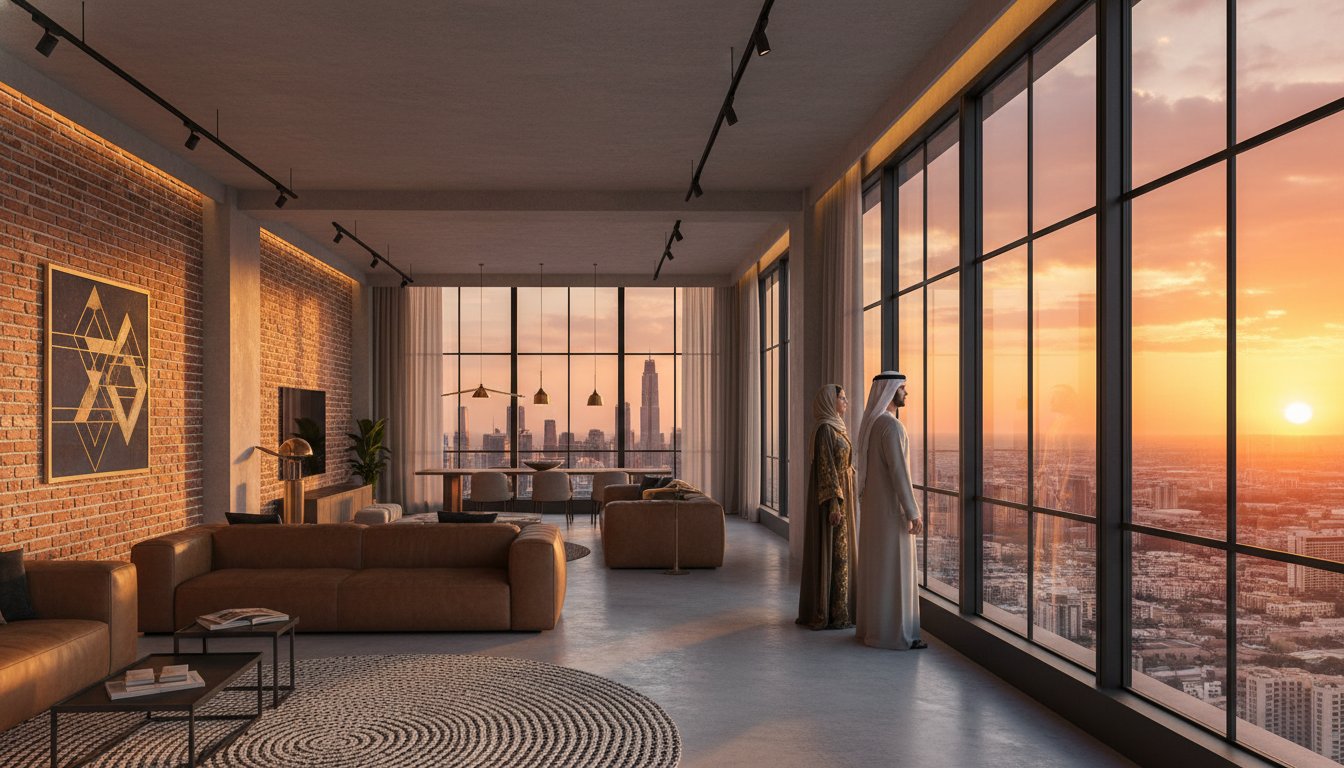
The most lucrative real estate transitions don’t happen in the quiet suburbs; they occur when industrial grit is meticulously curated into architectural gold. You’ve likely noticed how certain urban districts command a prestige that transcends their physical boundaries, turning historical neglect into a hallmark of exclusivity. This isn’t a matter of chance, but a specific urban phenomenon centered on the Soho aesthetic that has redefined luxury living for high-net-worth individuals since the first lofts were reclaimed in 1970s Lower Manhattan.
By reading this analysis, you’ll discover how the Soho concept evolved from a gritty artist enclave into a premier global real estate asset class. We’ll examine the specific "Soho effect" that drives long-term capital appreciation and identify where these sophisticated investment opportunities are emerging today, from London’s West End to the rising skylines of Dubai. We’ll also provide a high-level comparison of how this aesthetic is being reinterpreted in modern hubs, moving beyond the surface-level descriptions often found in general market reports. You’ll gain the clarity needed to identify assets that balance historical soul with contemporary financial performance.
Key Takeaways
-
Trace the transformation of industrial cast-iron architecture into the world’s most coveted residential lofts and a premier global asset class.
-
Compare the investment dynamics of London and Manhattan to understand how extreme scarcity drives sustained capital appreciation for discerning owners.
-
Discover how the soho concept is being reimagined in Dubai through exclusive branded residences that set new benchmarks for urban prestige.
-
Evaluate the financial case for Soho-style assets, focusing on why these unique properties command superior rental yields and long-term growth.
-
Gain insights into curating a bespoke global portfolio by leveraging Julius Property’s unparalleled network across New York, London, and Dubai.
Table of Contents
-
The Evolution of Soho: From Industrial Heritage to Global Luxury Standard
-
Comparing the Icons: Investment Dynamics of London and Manhattan Soho
-
The Soho Lifestyle in Dubai: Urban Sophistication Reimagined
-
The Investment Case for Soho-Inspired Real Estate: Yields and Growth
The Evolution of Soho: From Industrial Heritage to Global Luxury Standard
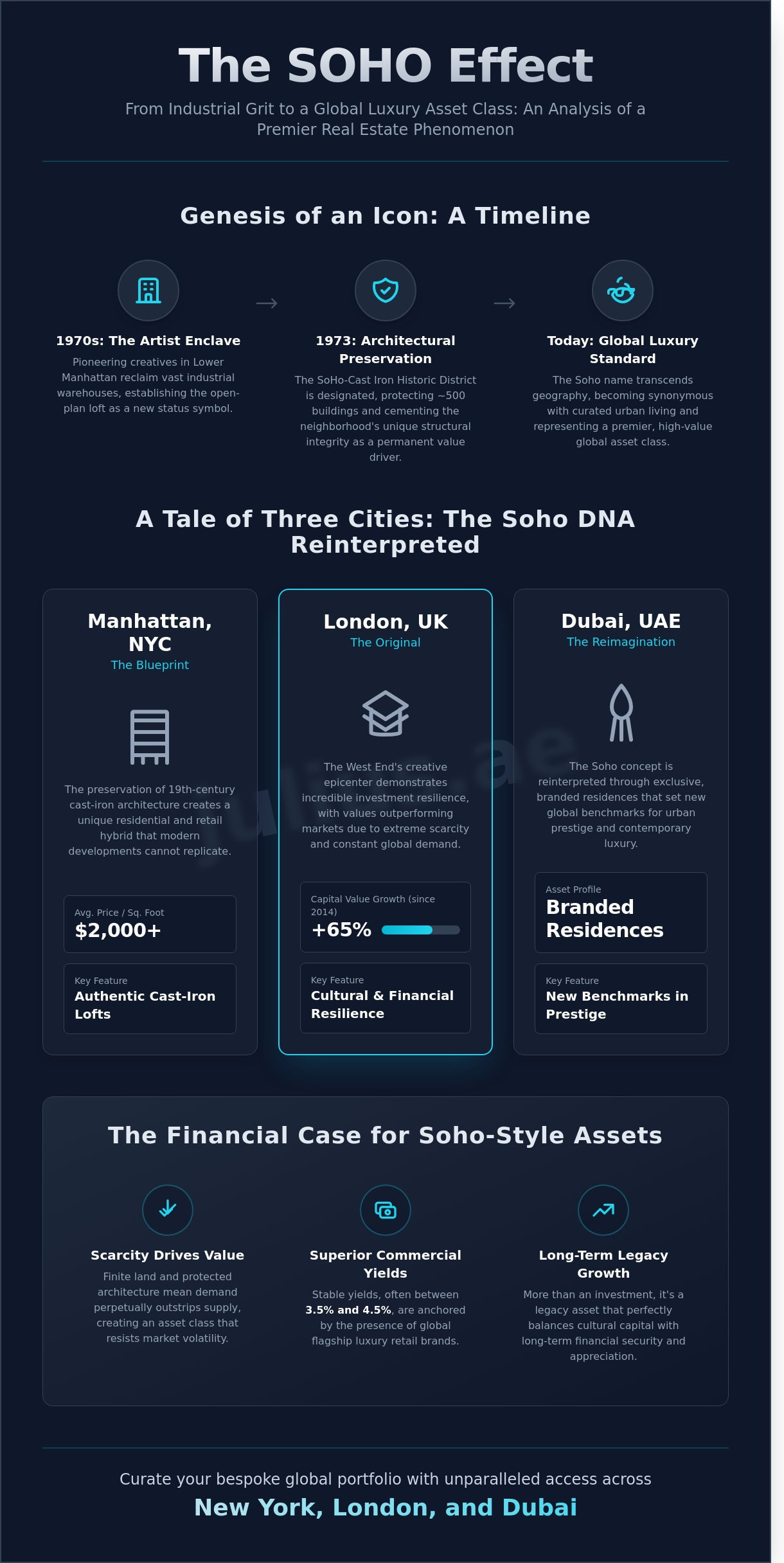
Soho represents a rare phenomenon in global real estate where a name transcends geography to become a synonym for curated urban living. While the term originated in the 17th century as a hunting cry in London’s West End, its 20th-century reinvention in New York City redefined the luxury market. In 1962, urban planner Chester Rapkin coined the acronym "South of Houston" to describe a district once dominated by textile factories and industrial warehouses. This linguistic shift signaled the birth of a global brand. The Evolution of Soho illustrates how industrial grit transitioned into a template for high-value residential assets through visionary adaptive reuse.
The 1973 designation of the SoHo-Cast Iron Historic District protected approximately 500 buildings, ensuring that the neighborhood’s structural integrity remained a permanent value driver. This preservation allowed for the "Artist-Led Gentrification" model to flourish. During the 1970s, pioneering creatives moved into vast, underutilized spaces, establishing the open-plan loft as the ultimate status symbol. These properties now command some of the highest price-per-square-foot valuations in the world, blending historical texture with a modern aesthetic defined by 15-foot ceilings and unencumbered floor plates.
To better understand the architectural allure and residential potential of this district, watch this helpful video:
The Manhattan Blueprint
The preservation of New York’s cast-iron architecture serves as the primary engine for the neighborhood’s enduring desirability. These 19th-century structures offer a specific aesthetic profile that modern developments struggle to replicate. Investors recognize the district as a premier retail and residential hybrid where flagship bespoke luxury stores occupy the ground floors while multi-million dollar lofts sit above. The transition of these spaces from 19th-century manufacturing hubs to 21st-century penthouses represents a masterclass in asset appreciation, where the "grit" of the past is meticulously polished for the elite buyer.
Just as these architectural gems are polished to perfection, those looking for the ultimate personal statement can check out Javda Jewelry to discover how precision-cut diamonds define luxury in every setting.
The London Original
Across the Atlantic, the London original remains the vibrant epicenter of the West End’s creative and media sectors. Since the 1950s, it’s served as the heartbeat of the British film industry, centered around Wardour Street. While it long maintained a bohemian reputation, the last decade has seen a decisive shift toward high-end residential developments. The area’s historic urban core demonstrates incredible investment resilience, with property values often outperforming broader market trends due to limited supply and constant global demand. For the visionary investor, soho isn’t just a location; it’s a legacy asset that balances cultural capital with financial security.
Comparing the Icons: Investment Dynamics of London and Manhattan Soho
The investment profile of soho transcends traditional real estate metrics; it represents a rare convergence of cultural capital and financial resilience. Over the last decade, Manhattan’s SoHo has maintained a price-per-square-foot average exceeding $2,000, while London’s West End equivalent has seen a 65% increase in capital value since 2014. This appreciation stems from a fundamental lack of inventory. In these districts, the supply of land is finite, ensuring that demand perpetually outstrips availability. The Evolution of Soho highlights how the shift from industrial use to high-end residential lofts created a unique asset class that resists market volatility. Commercial yields in these high-traffic zones remain stable, often hovering between 3.5% and 4.5%, bolstered by the presence of global flagship brands. Branded luxury retail acts as a valuation anchor; when a house like Louis Vuitton or Apple secures a long-term lease, the surrounding residential assets experience a halo effect of security and prestige.
Market Liquidity and Buyer Profiles
Acquisitions within these districts are driven by a curated blend of global High-Net-Worth Individuals (HNWIs) and the creative elite. Approximately 35% of recent transactions in these neighborhoods involve buyers from the tech and fashion sectors who view property as both a lifestyle statement and a hedge against inflation. These assets are considered recession-resistant because they represent the pinnacle of urban living. Investors often utilize these prime holdings to diversify portfolios, seeking the stability that only a world-class zip code can provide. For those looking to mirror this level of sophistication in emerging hubs, exploring bespoke investment opportunities through expert advisors ensures a seamless entry into elite markets.
Regulatory and Heritage Constraints
Heritage status serves as a protective moat for investors by strictly limiting new supply. In London, the Soho Conservation Area ensures that the 18th-century architectural fabric remains untouched, effectively banning the high-rise developments that dilute value in other districts. Navigating planning permissions in Westminster requires deep expertise, as 75% of buildings in the area carry some form of historic listing. This preservation creates a significant "heritage premium." Modern buyers are willing to pay a 20% to 30% markup for properties that blend historic facades with contemporary, bespoke interiors. This constraint on new construction guarantees that existing assets remain the gold standard of urban real estate, protecting long-term capital appreciation from the risks of oversupply.
The Soho Lifestyle in Dubai: Urban Sophistication Reimagined
Dubai’s property market is witnessing a profound shift. The city has moved beyond mere scale, embracing the textured, artistic soul of the soho movement. This isn’t a carbon copy of New York; it’s a refined Middle Eastern evolution. Developers are now prioritizing "branded urbanism," where the prestige of a neighborhood is defined by its cultural density rather than just its skyline view. The city’s interpretation focuses on creating self-contained ecosystems that blend work, art, and high-end living into a single, seamless experience.
The arrival of Soho House in Dubai serves as a definitive catalyst. It signals to the global elite that a district has achieved a specific level of social capital and "cool." These hubs attract a demographic that values walkability and spontaneous social interaction, providing a sophisticated contrast to the isolated luxury of traditional gated villa communities. By integrating private members’ clubs and boutique retail into residential footprints, Dubai has successfully reimagined the urban loft lifestyle for a desert metropolis.
Curating the Aesthetic in the Middle East
The demand for "industrial-chic" living has surged among the city’s growing population of creative professionals and European expats. They’re looking for the raw elegance of exposed brick, double-height ceilings, and steel-framed windows. This aesthetic represents a move toward "quiet luxury." It’s about the quality of light and the flow of space rather than overt displays of wealth. Modern residents want homes that feel curated, not just constructed.
Specific developments in City Walk and Dubai Design District capture this spirit perfectly. They offer the grit of an urban loft with the seamless service of a five-star hotel. For those looking to secure a piece of this architectural evolution, our Luxury Apartments for Sale in Dubai: The 2026 Investor’s Curated Guide provides a deep dive into the most prestigious opportunities available in the current market.
Investment Potential in Emerging Soho Hubs
Early-entry into these lifestyle-centric districts offers a distinct financial advantage. As Dubai’s 2040 Urban Master Plan aims to double the city’s green and recreational spaces, property values in walkable, "20-minute city" hubs are projected to rise. Data from the first half of 2024 shows that high-end urban apartments in these zones are generating gross rental yields between 7% and 9%. This significantly outperforms the 4% to 6% typically seen in more mature, traditional villa segments.
The 2022 expansion of the Golden Visa program has also changed the investment landscape. Investors can now secure long-term residency through off-plan purchases over AED 2 million, encouraging a shift from transient rentals to permanent urban residency. This policy creates a stable, high-net-worth tenant base that prioritizes the soho lifestyle. These residents aren’t just buying a floor plan; they’re investing in a curated urban identity that promises both capital appreciation and a superior quality of life.
The Investment Case for Soho-Inspired Real Estate: Yields and Growth
Investors prize soho-inspired assets for their unique ability to blend historic character with modern utility. These properties often see a 15% to 20% rental premium over standard luxury builds in the same postal code. This isn’t just about aesthetics; it’s about the lifestyle ecosystem that high-net-worth individuals demand. High-ceilinged lofts and industrial-chic finishes attract a demographic of "creative wealth" that prioritizes atmosphere over traditional opulence. Maintaining this value requires meticulous property management to ensure the asset remains pristine while the surrounding neighborhood evolves. A well-managed asset in a cultural hub provides a resilient hedge against inflation and market volatility, as demand for unique urban spaces consistently outstrips supply.
Urban Regeneration as a Catalyst
Identifying the next soho involves looking at specific cultural triggers before the gentrification curve peaks. Data from global indices suggests that districts with a high concentration of galleries and independent boutiques outperform broader residential markets by approximately 4.5% annually. The presence of anchor lifestyle brands, such as elite gyms or boutique hotels, signals a shift in demographic long before the mainstream market catches on. Savvy investors look at The Strategic Role of a Commercial Property Brokerage in 2026 to understand how these commercial anchors drive residential capital appreciation. When a neighborhood transitions from industrial to artisanal, the first 24 months of regeneration offer the most significant growth potential for early-stage capital.
Branded Residences and the Soho Brand
The "Soho House Effect" is a documented phenomenon in global real estate. Properties within a 500-meter radius of these private clubs often experience an immediate uplift in valuation and higher occupancy rates. In London’s Shoreditch, property values rose significantly faster than the city average after the opening of local clubs in the early 2000s. We’re seeing a fundamental shift toward community-based luxury. Investors aren’t just buying square footage; they’re buying access to a curated network and a specific social status. Branded urban assets retain their value longer during market downturns because they offer a lifestyle that’s difficult to replicate in the suburbs. This long-term value retention makes them essential for a diversified luxury portfolio focused on capital preservation and steady yield.
Bespoke management ensures that these properties don’t just age, but mature with grace. The art of investing in these districts requires a balance of financial logic and aesthetic appreciation. It’s about recognizing the intangible value of culture and how it translates into tangible capital growth over a ten-year horizon. Our experts curate opportunities that align with this visionary approach to wealth preservation, focusing on assets that define the skyline and the culture of the city.
Consult with the experts at Julius to secure your next high-yield luxury asset
Curating Your Soho Portfolio with Julius Property
Building a collection of premier urban assets requires more than capital; it demands a discerning eye for architectural integrity and cultural relevance. Julius Property serves as the bridge between global financial hubs, specializing in the bespoke sourcing of exclusive lofts and soho-inspired properties. Our reach extends across the most coveted postcodes in London, Dubai, and New York, ensuring our clients access assets that define modern sophistication. We find the rare. We secure the exceptional.
We provide high-net-worth investors with a strategic advantage through our deep-rooted connections. Our team identifies off-market opportunities that never reach the public eye, leveraging over 15 years of combined market intelligence to secure rarity. This approach transforms property acquisition into a refined art form, where every unit added to your portfolio aligns with a broader vision of urban excellence and long-term value retention.
Expert Guidance Across Borders
Navigating the complex regulatory environments of international hubs requires a partner with localized expertise and a global perspective. Our specialists understand the technical nuances of luxury real estate in both London and Dubai, where market dynamics shift based on specific district zoning or tax adjustments. By utilizing our real estate investment consultancy London, you gain a dedicated advisor who prioritizes yield stability and capital growth.
-
Seamless cross-border transaction management for international buyers, handling everything from initial inquiry to final key handover.
-
In-depth analysis of emerging soho-style districts in the UAE, such as high-ceilinged industrial aesthetics within DIFC or the low-rise sophistication of City Walk.
-
Rigorous due diligence to ensure every asset meets the highest standards of construction, design, and legal compliance.
Your Vision, Our Curation
We don’t simply list properties; we curate experiences tailored to your lifestyle and financial goals. Our process begins with personalized property tours and exhaustive market analysis, providing a clear view of the current landscape. We act as stewards of your luxury assets, managing the intricacies of ownership so you can focus on your legacy. Every decision is backed by real-time data, ensuring your investment stands the test of time in an ever-evolving market.
The pursuit of excellence is a continuous journey. Partner with Julius Property to curate your global real estate legacy and secure your place within the world’s most prestigious urban districts.
Elevating Your Portfolio Through Urban Refinement
The enduring allure of soho reflects a global shift where historical character meets modern capital. Investors who recognize the pattern of urban regeneration in London and Manhattan are now looking toward Dubai to find similar growth trajectories. These markets don’t just offer square footage. They provide a lifestyle that commands premium rents and high occupancy rates across prime districts. Success in this niche requires more than just market awareness; it demands the precision of a curator who understands the nuances of architectural heritage and investment yields.
Julius Property brings this level of expertise to your global portfolio. With a proven track record in prime urban regeneration markets, we provide exclusive access to off-market urban lofts in London and Dubai. Our expert consultancy is tailored for high-net-worth individuals seeking to diversify their holdings through assets that balance aesthetic beauty with financial logic. We simplify the complexity of international markets, ensuring your acquisition process is seamless and visionary.
Discover Your Next Soho-Inspired Investment with Julius Property
Your journey toward owning a piece of the world’s most sophisticated urban landscapes starts with a single, strategic choice.
Frequently Asked Questions
What is the history of the name Soho in London and New York?
The name Soho originated in London as a hunting cry first recorded in 1636, while the New York iteration is a geographic acronym for "South of Houston Street." Chester Rapkin, an urban planner, coined the New York term in his 1962 report to describe the industrial district. Both names now represent a global standard for artistic heritage and architectural prestige in the luxury market.
Why is Soho real estate so expensive compared to other urban areas?
Soho real estate commands premium prices due to a strict scarcity of inventory and rigorous heritage preservation laws that prevent new high-rise developments. In 2023, property values in London’s Soho remained 15% higher than neighboring districts because of this limited supply. Investors pay for the historical soul of the buildings and the unparalleled access to elite global culture that defines the district.
What are the key features of a Soho-style loft apartment?
A Soho-style loft is defined by expansive open floor plans, soaring 12-foot ceilings, and original industrial elements like cast-iron pillars or exposed brickwork. Large sash or Crittall windows flood the space with natural light, creating a gallery-like atmosphere for residents. These residences prioritize the art of living by blending raw architectural history with bespoke modern finishes and high-end materials.
How does Soho-style living in Dubai compare to the original New York lofts?
Dubai’s interpretation of soho living focuses on ground-up luxury developments that emulate the aesthetic of New York lofts while adding 21st-century amenities. While original Manhattan lofts are often repurposed 19th-century factories, Dubai projects offer curated climate control, smart home integration, and private infinity pools. The result is a seamless fusion of industrial grit and Middle Eastern opulence that appeals to the modern visionary.
Is Soho a good location for commercial real estate investment in 2026?
Soho remains a robust choice for commercial investment in 2026 as demand for boutique office spaces and experiential retail continues to outpace traditional business districts. Market data from late 2023 suggests a 5% annual increase in rental yields for creative hubs in these areas. Investors should target Grade A assets that cater to the tech and fashion sectors, as these industries prioritize the district’s vibrant lifestyle.
What is the "Soho effect" in urban regeneration projects?
The "Soho effect" describes a specific pattern of urban regeneration where an influx of artists and creative pioneers transforms a neglected industrial area into a high-value luxury hub. This phenomenon was first documented in the 1970s when Manhattan’s manufacturing zone became a global center for the arts. Developers use this blueprint to revitalize districts, ensuring that cultural capital translates directly into long-term capital appreciation for property owners.
How can international investors buy property in Soho, London?
International investors can acquire soho property through a straightforward legal process that requires a UK-based solicitor and adherence to Anti-Money Laundering regulations. Non-residents often utilize offshore structures or SPVs to manage their portfolios, though 2022 legislation requires all foreign entities to register with Companies House. Partnering with a bespoke advisory firm ensures that every detail of the transaction is handled with precision and transparency.
What role do branded residences play in modern Soho developments?
Branded residences elevate modern Soho developments by providing the five-star service and security of a luxury hotel within a private residential setting. These projects often see a 20% price premium because they offer a curated lifestyle backed by global names in hospitality or fashion. For the discerning investor, a branded residence represents a visionary marriage of real estate and elite service standards that guarantees a signature living experience.
Leave a Reply